Auto insurance is more than just a legal requirement; it’s a vital aspect of vehicle ownership that protects you from unforeseen events on the road. Whether you’re a seasoned driver or a new owner, understanding the intricacies of auto insurance can save you time and money while ensuring peace of mind. This guide dives into the key components of auto insurance, the factors influencing your rates, and essential tips for navigating the landscape of coverage options.
From exploring the various types of coverage to understanding policy terms and the claims process, we’ll equip you with the knowledge necessary to make informed decisions. With insights on saving strategies and future trends in the industry, this comprehensive overview aims to enhance your understanding of auto insurance and its significance in your life as a driver.


Understanding Auto Insurance
Auto insurance is a critical financial product designed to protect vehicle owners from potential losses stemming from accidents, theft, or damage. It not only safeguards your investment in your vehicle but also provides peace of mind while driving. By having auto insurance, vehicle owners can navigate the roads with confidence, knowing that they are financially protected against unforeseen events.There are various types of auto insurance coverage available, each serving different needs and circumstances.
Understanding these types is essential for vehicle owners to choose the right policy that fits their lifestyle and financial situation. Auto insurance typically includes the following coverage options:
Types of Auto Insurance Coverage
Each type of auto insurance coverage plays a specific role in protecting drivers and their vehicles. Here’s a breakdown of key coverage types:
- Liability Coverage: This is the most basic type of auto insurance, which covers damages to other people and their property in the event of an accident you cause.
- Collision Coverage: This coverage pays for damage to your vehicle resulting from a collision with another vehicle or object, regardless of fault.
- Comprehensive Coverage: Comprehensive insurance protects against non-collision related incidents, such as theft, vandalism, or natural disasters.
- Personal Injury Protection (PIP): PIP covers medical expenses for you and your passengers, regardless of who is at fault in an accident.
- Uninsured/Underinsured Motorist Coverage: This provides protection in case you are involved in an accident with a driver who lacks sufficient insurance coverage.
Understanding the key components of an auto insurance policy is essential for vehicle owners to make informed decisions. These components include premiums, deductibles, and limits, which play a significant role in determining the cost and coverage of the insurance policy.
Key Components of an Auto Insurance Policy
The main components of an auto insurance policy include:
- Premium: This is the amount you pay for your insurance coverage, typically on a monthly or annual basis. Factors affecting premiums include your driving record, the type of vehicle, and your location.
- Deductible: The deductible is the amount you pay out of pocket before your insurance coverage kicks in during a claim. Choosing a higher deductible can lower your premium but means more financial responsibility in the event of a claim.
- Limits: Insurance limits refer to the maximum amount your insurance company will pay for a covered loss. It’s crucial to select limits that adequately protect your assets and reflect the value of your vehicle.
Understanding the intricacies of auto insurance is essential for ensuring you have the right coverage to protect yourself and your vehicle on the road.
Factors Influencing Auto Insurance Rates
Understanding the factors that influence auto insurance rates is crucial for consumers looking to manage their expenses effectively. Insurance premiums can vary significantly based on a variety of elements, including individual driving behavior, geographical location, and the characteristics of the vehicle owned. This knowledge empowers consumers to make informed decisions regarding their insurance options.One of the most significant factors impacting auto insurance rates is the driving history of the individual.
Insurance companies typically assess a driver’s past behavior on the road, including incidents of accidents, traffic violations, and claims history. A clean driving record often results in lower premiums, while frequent claims or tickets can lead to substantial increases in insurance costs.
Driving History and Its Impact on Premiums
A driver’s record provides a direct reflection of their risk level, which insurers use to calculate premiums. The most notable aspects of driving history that affect rates include:
- Accidents: Having a recent accident on record can raise premiums, sometimes by 20% or more depending on severity and liability.
- Traffic Violations: Moving violations, such as speeding tickets or DUIs, can lead to immediate premium hikes.
- Claims History: A history of frequent claims, regardless of fault, signals to insurers a higher risk, which typically results in higher rates.
Another vital factor influencing auto insurance costs is the location where the vehicle is primarily driven and stored. Different areas come with varying risk profiles based on crime rates, frequency of accidents, and the prevalence of uninsured drivers.
Location and Insurance Rate Variation
The geographical region plays a crucial role in determining insurance rates. Key considerations include:
- Urban vs. Rural: Urban areas generally have higher rates due to increased traffic and accident rates, while rural areas tend to have lower premiums.
- Crime Rates: Areas with high theft rates may lead to increased premiums, especially for vehicles that are frequently targeted.
- Weather Patterns: Regions prone to natural disasters like hurricanes or floods may see higher rates due to the increased likelihood of damage claims.
Additionally, the type of vehicle owned can significantly influence insurance costs. Insurers assess various characteristics of the car, including its make, model, and safety features, to determine risk levels.
Vehicle Type and Insurance Premiums
The kind of vehicle you drive impacts your insurance premiums in multiple ways, including:
- Safety Ratings: Vehicles with high safety ratings often qualify for discounts, while those deemed less safe can incur higher rates.
- Repair Costs: Cars that are expensive to repair or replace lead to higher premiums, as insurers anticipate greater costs associated with claims.
- Performance and Theft Risk: High-performance vehicles typically attract higher rates due to their increased likelihood of accidents, and models with high theft rates may also lead to elevated costs.
Lastly, credit scores play a crucial role in determining auto insurance premiums. Insurers often consider credit history as an indicator of responsibility and reliability.
Role of Credit Scores in Insurance Premiums
Credit scores significantly influence the calculations of insurance rates. A better credit score can lead to lower premiums, while a poor credit score can result in increased costs. The reasoning behind this practice is based on data suggesting that individuals with higher credit scores tend to file fewer claims.
- Score Ranges: Generally, drivers with excellent credit might enjoy premiums that are 30% lower than those with poor credit.
- Long-term Impact: Maintaining a good credit score not only reduces insurance costs but can also provide better overall financial health.
“Insurance companies use credit scores not just for underwriting but as a key factor in pricing policies, reflecting a consumer’s likelihood to file claims.”
Understanding these factors allows consumers to take proactive steps towards managing their auto insurance costs effectively.
Comparing Auto Insurance Providers
Choosing the right auto insurance provider can significantly impact both your financial security and peace of mind. With numerous options available, it becomes essential for consumers to understand what each provider offers in terms of coverage, service, and reliability. This comparison will help you make an informed decision tailored to your specific needs.When evaluating auto insurance providers, several criteria should be considered to ensure you select the best option.
These include coverage options, premium rates, customer service quality, and claims processing efficiency. Understanding these factors can aid in identifying which company aligns with your individual preferences and requirements.
Comparison of Popular Auto Insurance Companies
To provide a clearer perspective on what various auto insurance companies offer, here is a comparison table that Artikels key features and offerings of some of the leading providers in the market:
| Insurance Provider | Coverage Options | Average Monthly Premium | Customer Service Rating | Claims Processing Time |
|---|---|---|---|---|
| State Farm | Liability, Collision, Comprehensive, Uninsured Motorist | $120 | 4.5/5 | 10 days |
| Geico | Liability, Collision, Comprehensive, Personal Injury Protection | $100 | 4.7/5 | 7 days |
| Progressive | Liability, Collision, Comprehensive, Customizable Options | $110 | 4.3/5 | 14 days |
| Allstate | Liability, Collision, Comprehensive, Roadside Assistance | $130 | 4.2/5 | 12 days |
| Farmers | Liability, Collision, Comprehensive, Gap Insurance | $115 | 4.4/5 | 11 days |
The table above presents a quick reference for evaluating some of the most recognized auto insurance companies. When assessing these options, consider factors such as the type of coverage you require and how each provider’s premium rates fit into your budget. Customer service ratings and claims processing times are crucial indicators of an insurance provider’s reliability. A higher customer service rating often corresponds to efficient and helpful support during claims filing.
Additionally, quicker claims processing times can alleviate stress in the event of an accident, allowing you to return to normalcy sooner. For example, Geico’s average claims processing time of just 7 days showcases its efficiency, making it a favorable choice for many consumers.As you navigate through your options, keep these points in mind to ensure you choose an auto insurance provider that meets your unique needs and expectations.
Understanding Policy Terms and Conditions
Navigating the intricacies of auto insurance can be challenging, especially when it comes to understanding the various terms and conditions that shape your coverage. Knowing these elements is crucial to ensuring you have the right protection in place for your vehicle and personal liability. This section breaks down the essential components of auto insurance policies, focusing on common terminology, the role of exclusions and endorsements, and how to decipher the declarations page.
Common Terms and Conditions in Auto Insurance
Familiarizing yourself with common terms is essential for comprehending your auto insurance policy. Here are some key definitions you should know:
- Premium: The amount you pay for your insurance coverage, typically monthly or annually.
- Deductible: The amount you must pay out-of-pocket before your insurer covers the rest of the claim.
- Liability Coverage: Protection against claims resulting from injuries and damage to others for which you are found responsible.
- Comprehensive Coverage: Insurance that covers damage to your vehicle not caused by a collision, such as theft or natural disasters.
- Collision Coverage: Coverage for damage to your own vehicle resulting from a collision with another vehicle or object.
- Policy Limit: The maximum amount your insurance will pay for a covered loss.
Significance of Exclusions and Endorsements
Exclusions and endorsements are critical aspects of your policy that dictate what is not covered and what additional protections may be included. Understanding these components can have a significant impact on your insurance coverage.
- Exclusions: Specific conditions or circumstances under which the policy will not provide coverage. Common exclusions include damages from racing, intentional acts, or using the vehicle for commercial purposes.
- Endorsements: Amendments or add-ons to your policy that modify coverage. For instance, a ride-sharing endorsement can extend your coverage while you drive for services like Uber or Lyft.
Reading and Understanding the Declarations Page
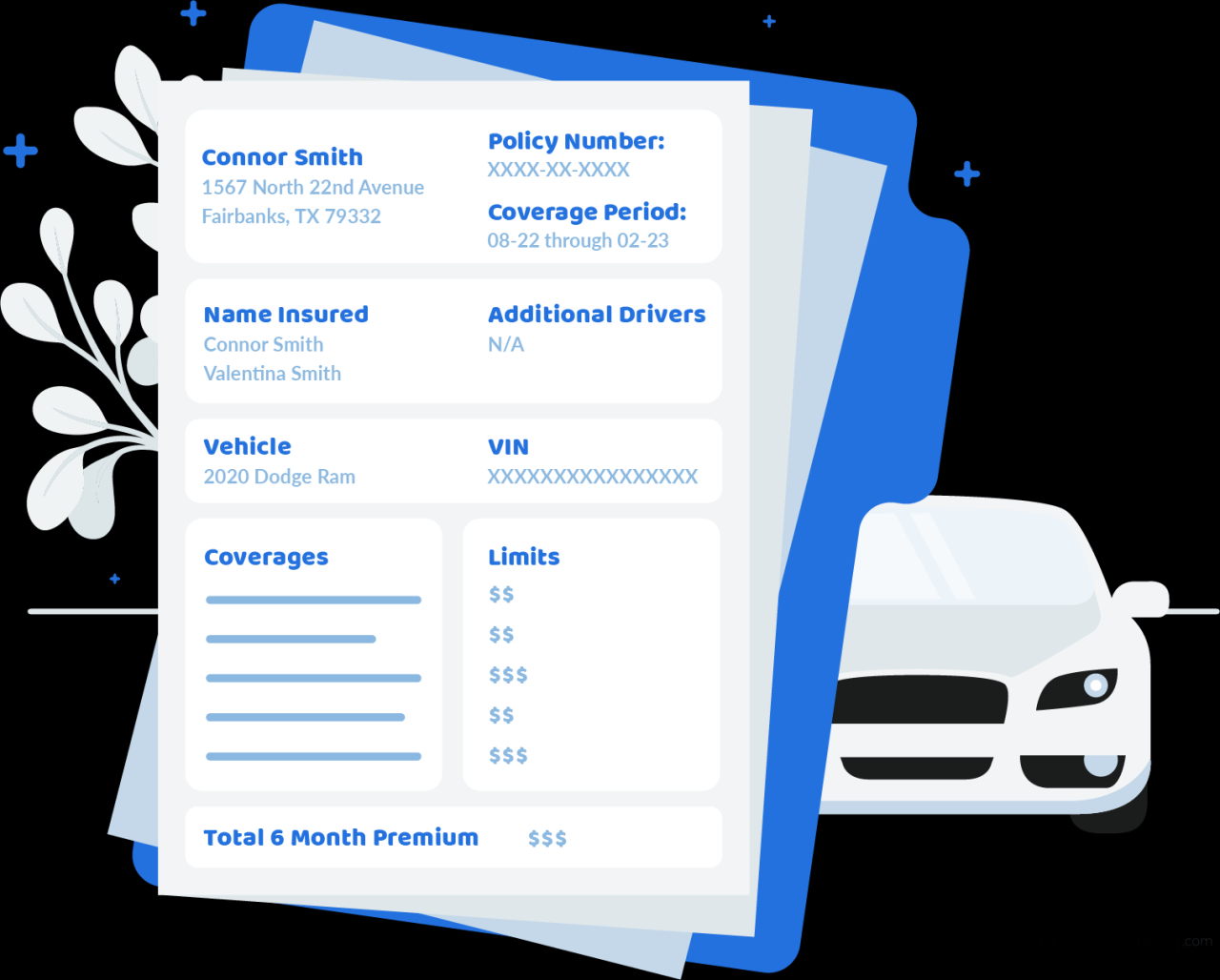
The declarations page of an auto insurance policy serves as an overview of your coverage and personal information. It’s important to know how to read this crucial document to ensure everything is accurate.The declarations page typically includes:
- Insured’s Name and Address: Confirms the individual(s) covered under the policy.
- Policy Number: A unique identifier for your coverage.
- Coverage Types and Limits: Artikels each type of coverage you have and the corresponding limits to understand the extent of your protection.
- Premium Amount: Displays the total premium you are responsible for based on the coverage selected.
- Effective Dates: Indicates when the coverage begins and ends, helping you stay on top of renewal dates.
Understanding the declarations page ensures that you are aware of your coverage limits and can help prevent any surprises when filing a claim. Always review this page carefully for accuracy and reach out to your insurer with any questions or discrepancies.
Tips for Saving on Auto Insurance
Finding ways to lower your auto insurance premiums can be a key step in managing your overall budget. By implementing certain strategies, you can potentially save a significant amount of money on your policy each year. Below are some effective tips to help you keep your insurance costs in check.
Strategies to Reduce Auto Insurance Premiums
Understanding the factors that influence your auto insurance rates can help you make informed decisions. Here are some practical strategies to consider for lowering your premiums:
- Shop Around: Compare quotes from multiple insurance providers to find the best rate that suits your needs.
- Increase Deductibles: Opting for a higher deductible can lower your monthly premium but ensure you can afford the deductible in case of a claim.
- Take Advantage of Discounts: Look for discounts offered by insurers, such as safe driver discounts, multi-car discounts, or student discounts.
- Install Safety Devices: Equipping your vehicle with anti-theft devices or advanced safety features may earn you additional savings.
- Limit Mileage: If you drive less than average, consider a low-mileage policy which can result in lower rates.
Benefits of Bundling Insurance Policies
Bundling your auto insurance with other types of insurance, such as home or renters insurance, can lead to significant cost savings. Insurance companies often offer attractive discounts for bundling, which can result in a lower overall premium. This not only simplifies your insurance management by dealing with a single provider but can also improve your chances of receiving personalized customer service and benefits.
By consolidating your policies, you may find that you qualify for higher-tier discounts, making it a financially savvy choice.
Impact of a Clean Driving Record on Rates
Maintaining a clean driving record is one of the most effective ways to secure lower insurance rates. Insurance companies typically reward drivers with accident-free histories with reduced premiums since they are seen as lower-risk clients. A clean record not only demonstrates responsible driving but can also qualify you for additional discounts. For instance, many insurers provide incentives for drivers who have not filed claims for a certain period.
This shows that good driving habits pay off in more ways than one, reflecting positively on both your safety and financial responsibilities.
The Claims Process
Filing an auto insurance claim can often feel daunting, but understanding the steps involved can make the process smoother. Knowing what to expect and how to effectively communicate with your insurer is crucial for a successful outcome. Here’s a breakdown of the claims process and tips for navigating common challenges.The claims process generally involves several key steps, from reporting the incident to receiving payment for damages.
Each step is essential in ensuring that your claim is handled efficiently and effectively. Here’s what you need to know about the typical sequence of events when filing a claim.
Steps Involved in Filing an Auto Insurance Claim
The claims process can be summarized in the following steps:
- Report the Incident: Notify your insurance company as soon as possible after the accident. Provide them with all relevant details, including date, time, location, and the parties involved.
- Document the Scene: Take photos of the accident scene, vehicle damages, and any injuries. Gather contact information from witnesses and other involved parties.
- Submit Your Claim: Fill out the necessary claim forms provided by your insurer. Be thorough and accurate in your descriptions.
- Assessment: An adjuster will evaluate the damages and determine the coverage applicable based on your policy.
- Claim Resolution: Once the assessment is complete, you’ll receive a decision regarding your claim and any payout you may be entitled to.
Each step is pivotal in ensuring clarity and thoroughness in your claim submission.
Common Challenges in the Claims Process
Policyholders often face various challenges during the claims process that can impede their ability to receive timely compensation. Understanding these common issues can help you prepare for potential roadblocks.
Factors such as delayed responses from insurers and discrepancies in documentation can complicate the claims process.
Some typical challenges include:
- Documentation Issues: Incomplete or unclear documentation can lead to delays. It’s vital to keep all records organized and easily accessible.
- Disputes Over Fault: If there is disagreement regarding who was at fault, this can prolong the claims process. Ensure that you have ample evidence to support your position.
- Slow Communication: Delays in communication from your insurer can add to frustration. Make it a point to follow up regularly and keep a record of all interactions.
Being aware of these challenges allows you to approach the claims process with a proactive mindset.
Best Practices for Documenting Incidents and Communicating with Insurers
Effective documentation and communication are crucial for a smooth claims process. Adhering to best practices can significantly enhance your chances of a favorable outcome.To ensure your claim is processed efficiently, consider the following tips:
- Take Detailed Notes: Document every interaction with your insurer, including dates, times, and the names of representatives you speak with.
- Gather Evidence: Collect all pertinent information such as police reports, photos, and medical records. This will aid in supporting your claim.
- Be Clear and Concise: When communicating with your insurer, provide clear and concise information. Avoid jargon and stick to the facts.
- Follow Up Regularly: Keep in touch with your claims adjuster to stay updated on your claim’s status and to address any issues promptly.
By implementing these best practices, you will be better equipped to navigate the complexities of the claims process, ensuring that you receive the coverage you are entitled to.
Legal Requirements for Auto Insurance
Auto insurance is not just a wise choice but a legal necessity in many states. Understanding the legal requirements for auto insurance is essential for all drivers to protect themselves, their vehicles, and others on the road. Each state has its own regulations regarding the minimum coverage required, and failing to comply can result in serious consequences.
Minimum Auto Insurance Coverage Requirements
Every state in the U.S. mandates some form of auto insurance coverage, but the specific requirements can vary significantly. The following provides an overview of typical minimum coverage requirements across several states:
- California: Requires a minimum of $15,000 for injury or death of one person, $30,000 for injury or death of two or more people, and $5,000 for property damage.
- Texas: Mandates $30,000 for injury or death to one person, $60,000 for injury or death to multiple people, and $25,000 for property damage.
- Florida: Requires $10,000 in personal injury protection (PIP) and $10,000 for property damage liability.
- New York: Requires $25,000 for bodily injury per person, $50,000 for total bodily injury, and $10,000 for property damage.
Understanding these requirements helps drivers to ensure they remain compliant and can avoid legal penalties.
Consequences of Driving Without Insurance
Driving without insurance can lead to severe repercussions that can affect your finances and legal standing. Penalties for uninsured driving typically include:
- Fines: Many states impose hefty fines for driving without insurance, which can range from a few hundred to several thousand dollars.
- License Suspension: Uninsured drivers often face the suspension of their driver’s license until they provide proof of insurance.
- Vehicle Impoundment: Law enforcement may impound vehicles operated by drivers without insurance, leading to additional fees for recovery.
- Legal Consequences: In some cases, repeat offenders may face criminal charges that could result in jail time.
These consequences highlight the importance of maintaining proper auto insurance coverage to avoid unnecessary risks.
Uninsured and Underinsured Motorist Coverage
Uninsured and underinsured motorist coverage (UM/UIM) is crucial for protecting drivers in cases where the at-fault party lacks sufficient insurance. This type of coverage helps cover costs that your primary insurance may not, including medical expenses and vehicle repairs.
- Uninsured Motorist Coverage: This protects you if you’re involved in an accident with an uninsured driver. It typically covers medical bills, lost wages, and other damages.
- Underinsured Motorist Coverage: This comes into play when the at-fault driver has insurance, but their coverage limits are too low to cover your damages. It fills the gap between their coverage and your actual expenses.
Having UM/UIM coverage is often seen as a safeguard against unexpected financial burdens resulting from accidents involving uninsured parties. Many states offer this coverage as an option or may even require it, emphasizing its importance in responsible driving.
Future Trends in Auto Insurance
The auto insurance industry is undergoing transformative changes driven by advancements in technology, regulatory shifts, and the introduction of autonomous vehicles. These factors not only alter traditional underwriting and pricing models but also redefine the overall landscape of risk management. As we look to the future, understanding these trends is essential for consumers and insurers alike.
Emerging Technology and Telematics
Technology is revolutionizing the auto insurance sector, particularly through telematics—devices that monitor driving behavior. Insurers are increasingly adopting these devices to provide usage-based insurance policies where premiums are based on actual driving habits rather than demographic factors alone. This personalized approach can lead to significant savings for safe drivers. Telematics data can include:
- Speed patterns
- Braking and acceleration habits
- Time of travel
- Distance driven
Insurers leverage this information to assess risk more accurately and adjust premiums in real-time, appealing to a market that increasingly values fairness and transparency.
Impact of Autonomous Vehicles on Insurance Policies and Liability
The rise of autonomous vehicles introduces new complexities into auto insurance policies and liability frameworks. With the shift from human drivers to automated systems, the question of liability becomes less clear. In cases of accidents, determining fault may shift from the driver to the manufacturer or software provider, fundamentally changing how insurers assess risk and liability.For instance, if an autonomous vehicle malfunctions due to a software error, the manufacturer may bear the financial responsibility for damages.
This shift necessitates the development of new insurance products tailored to cover potential liabilities associated with autonomous technology.
Changing Regulations and Their Effects on Auto Insurance
Regulatory bodies are adapting to the fast-evolving auto insurance landscape, which will have profound effects on future insurance markets. Increased scrutiny on data privacy, particularly with telematics, is leading to stricter regulations on how insurers can collect and use consumer data. Furthermore, as autonomous vehicles become more commonplace, new regulations governing their operation and insurance requirements will likely emerge. Insurers must remain agile and proactive in adapting their policies to comply with these evolving regulations while ensuring consumer protection.For instance, the National Highway Traffic Safety Administration (NHTSA) is currently developing guidelines to ensure the safe deployment of autonomous vehicles, which will directly influence insurance underwriting processes.
In summary, the future of auto insurance is characterized by rapid technological advancement, new liability paradigms, and evolving regulatory environments, all of which promise to reshape how consumers interact with their insurance providers and manage risk on the road.

Hi, I’m Lauren. As a digital enthusiast and storyteller, I love breaking down complex ideas into easy-to-read articles. My goal is to provide readers with fresh perspectives and helpful solutions through every piece I write.